I earn commissions when you sign up or buy through the affiliate links on this page, at no extra cost to you.
3D printing · Guide · By Mohammed Almuhanna · Updated
Does PETG Melt in a Hot Car? What 98C Did to My Prints
PETG does not melt in a hot car. It goes soft and deforms, and for a functional part that is just as bad. My dashboard hits 98C in the summer sun here in Saudi Arabia, and PETG starts losing its shape around 80C. I found that out when an airtight PETG container I forgot in the car for one afternoon came back warped and useless. The ASA reprint has lived in the same car for a month and still seals. Here is the temperature math behind that, and what to print for a part that has to survive a car.
What happened to my PETG container
I print a lot of small functional parts, and one of them was a lidded container built around an airtight seal, a screw cap closing onto an O-ring, so what I kept in it would not dry out. It was printed in PETG, it sealed well, and I carried it to work with me most days for weeks with no trouble. Then one afternoon in late May I forgot it in the car. When I came back the opening had warped out of round, just enough that the cap no longer sealed. A container whose only job was to stay airtight had become useless plastic.
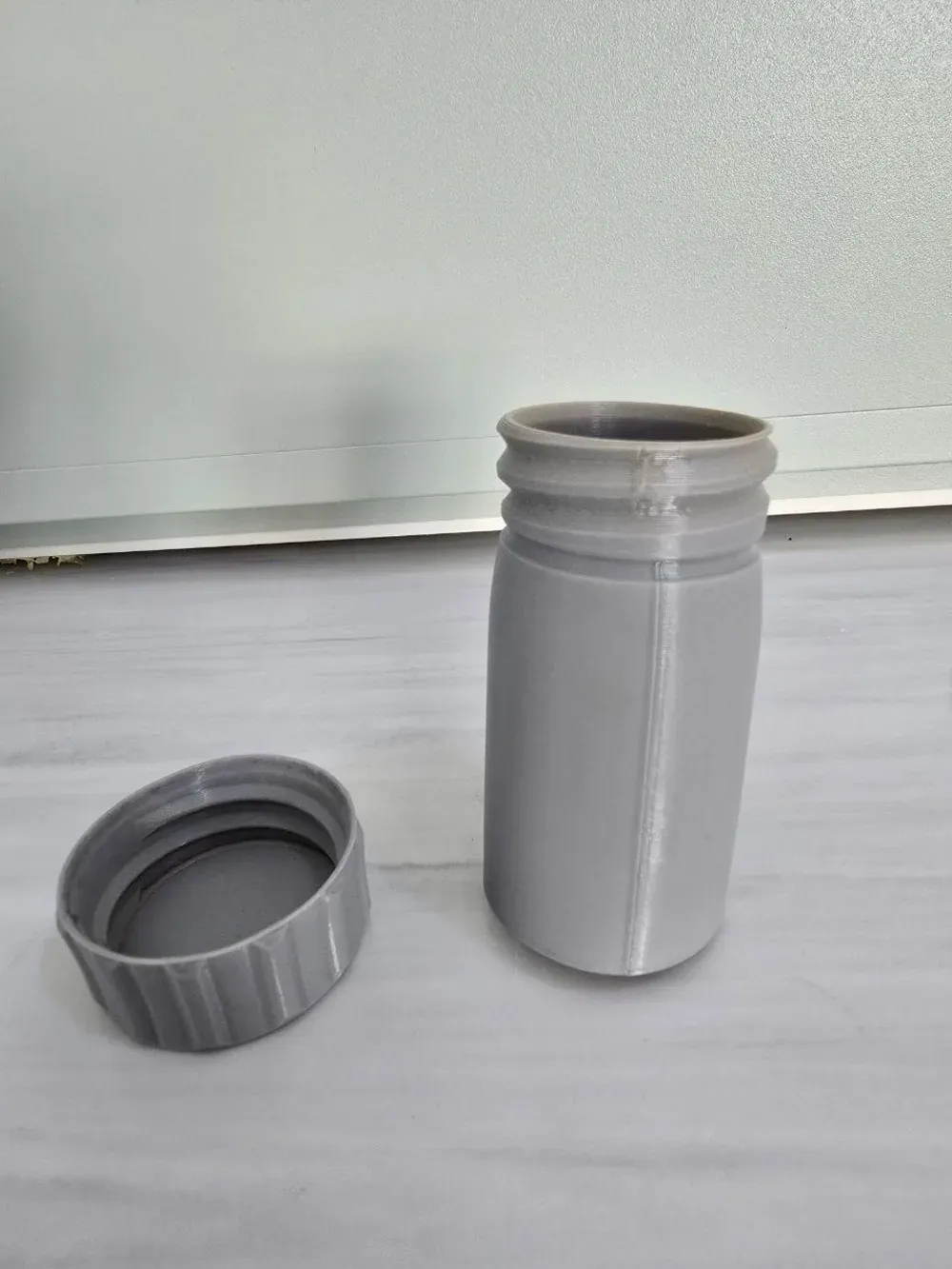
I reprinted the exact same model in ASA. Same printer, same shape, different plastic. That one has lived in the car for the past month through the same afternoons and it still seals. The only thing I changed was the material, and it was the difference between a part that survived and a part I threw away.
PETG goes soft at its glass transition, long before it melts
People search for whether PETG melts in a car, but melting is not the failure mode and never gets a chance to be. PETG only flows and extrudes at the nozzle around 230 to 250C, far hotter than any parked car will ever reach. The number that actually matters for a part sitting in heat is the glass transition, the temperature where a rigid plastic turns soft and rubbery and starts to deform under its own stress or weight. Cross past it and a printed part sags, loses tight tolerances, and an airtight fit opens up. It does not need to turn to liquid to become junk, it just needs to go soft while gravity and its own print stresses do the rest.
Every filament has its own glass transition, and that single number decides whether a part lives or dies on a hot dashboard.
| Filament | Goes soft around | On a 98C dashboard |
|---|---|---|
| PLA | ~55 to 60C | No chance, deforms easily |
| PETG | ~80C | At or above its limit, deforms |
| ABS | ~100 to 105C | Holds the heat, but UV weak |
| ASA | ~100 to 105C | Holds, and UV stable |
Why 98C, and why the dashboard is the worst spot
The 98C is a real reading off my own car, an IR thermometer on the dashboard, parked in direct sun on a Saudi summer afternoon with the outside air in the mid 40sC, which is normal here. That is the dash surface, not the cabin air. The dash sits right under the windshield and takes the sun straight through the glass, so it runs hotter than the air inside the car and far hotter than the shade outside. It read 88C in one spot and nearly 98C where the sun hit it straight on. And it is not only the dash, the seat read 78C and the road outside 75C. The whole car is an oven, and anything sitting on that dash bakes.
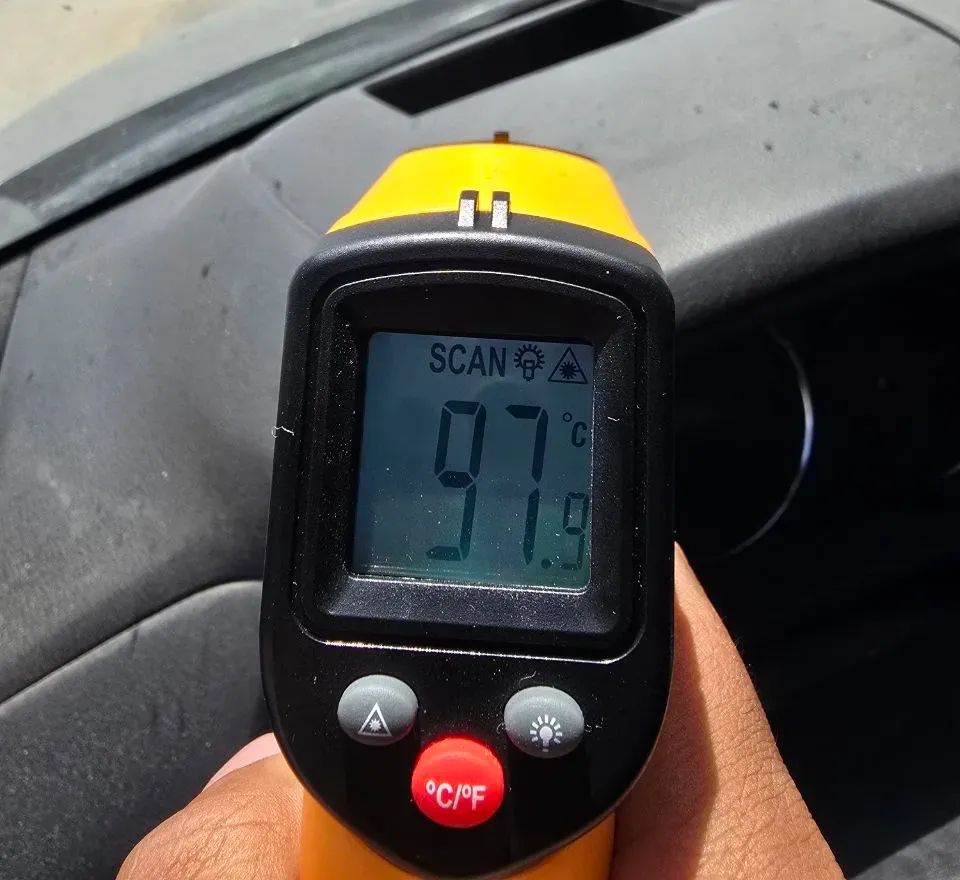
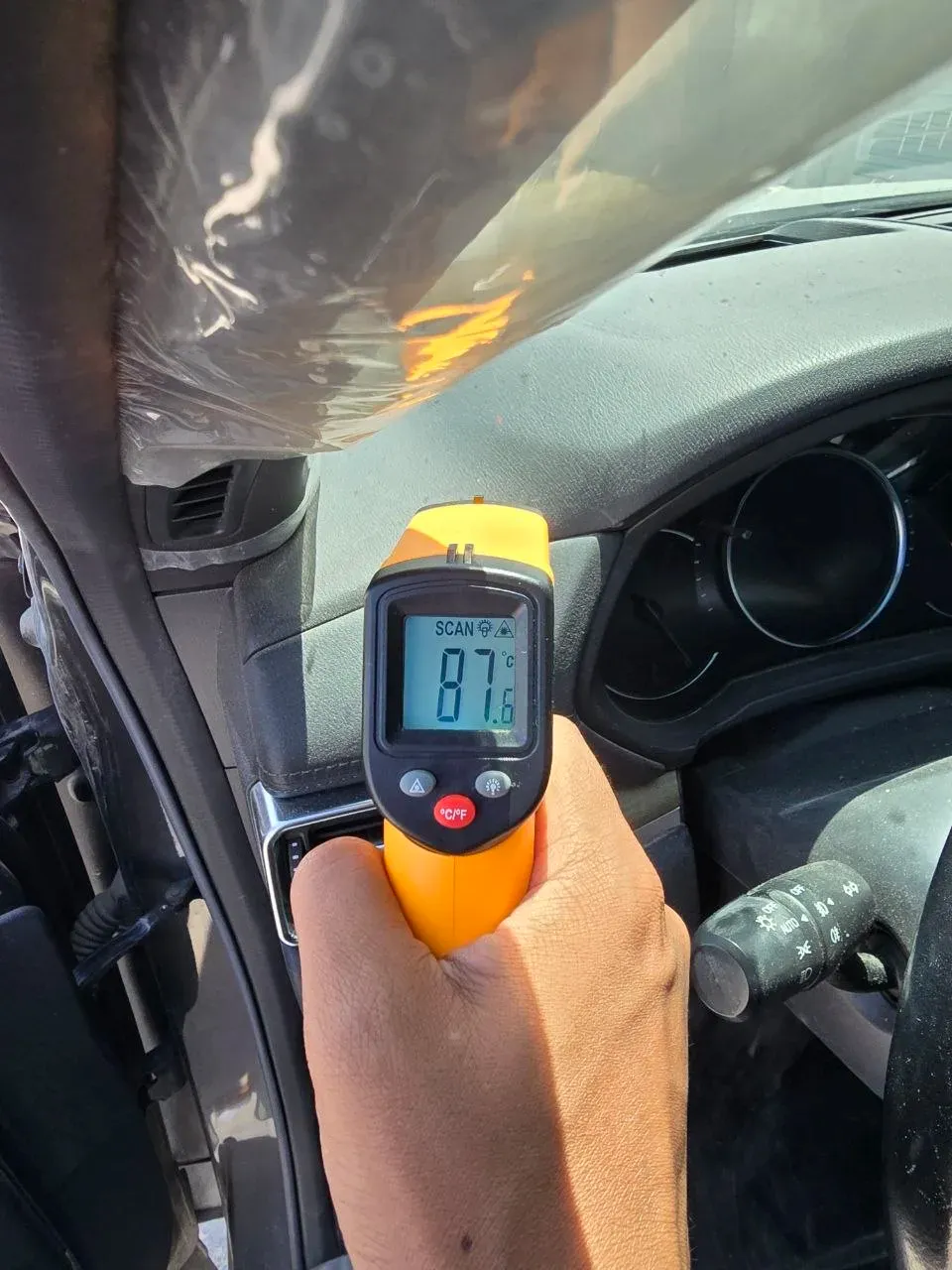
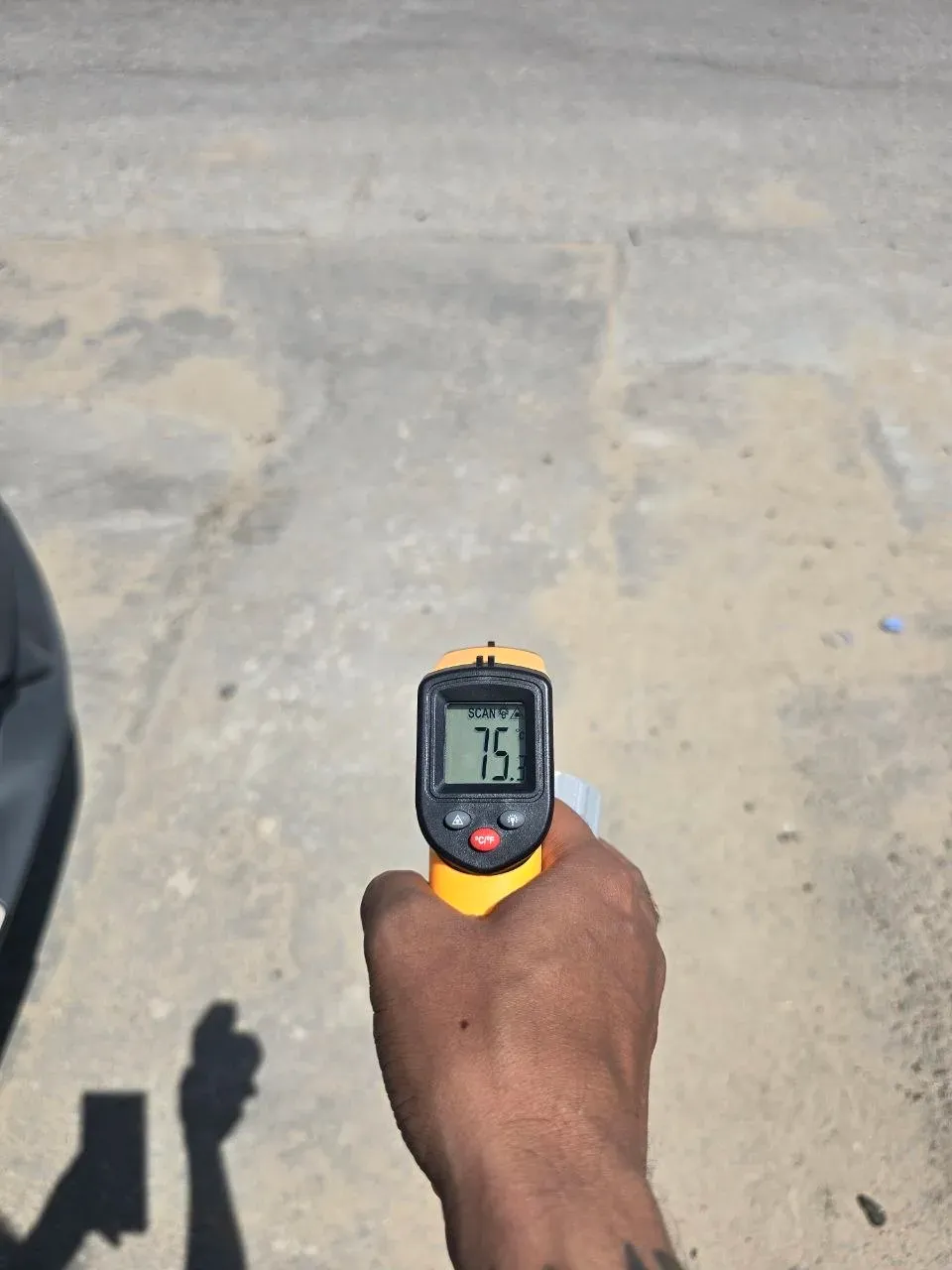
Put PETG there and it spends the whole afternoon at or above its 80C softening point. That is the entire story of my container. The rest of the time it never came close to 80C, so it held for weeks. On the dash it sat above 80C for hours, went soft, and sagged out of shape. Park the same car in shade, or live somewhere milder, and PETG in a car can be perfectly fine. The failure is specific to a part heat soaking in direct sun, which is the default for a car left outside where I am.
What I print for a car, and what I avoid
ASA is the answer for anything that has to survive a car in a hot, sunny climate. Its glass transition sits around 100 to 105C, just above a 98C dash, and it is UV stable, so it keeps its shape and does not go brittle or chalky in sunlight. In my car that margin has been enough, where PETG was not. ABS handles the same heat because its glass transition is just as high, but it resists UV worse than ASA, so for a part that also sees sun through a windshield ASA is the better pick. PLA is hopeless here. It softens at the lowest temperature of the common filaments, around 55 to 60C, so it would deform on that dash even faster than PETG. I did not bother putting a PLA part in the car to confirm it, because PLA gives up in far milder heat than this.
None of this makes PETG a bad filament. It is tough, cheap, and a good outdoor choice in shade or a cooler climate, and I still reach for it constantly. It just cannot take a dashboard in the sun. If you want the full buying breakdown for outdoor and heat, including brands, I wrote that up separately in the best filament for outdoor and heat guide, and the PLA vs PETG comparison and the filament types guide cover where each one fits.
Printing ASA so the part actually survives
ASA asks for more care than PETG, and most of it is the same care that stops warping. It wants a hot bed and an enclosure to hold chamber heat so the corners do not lift mid print, and it prints best with the part cooling fan off or very low. It also gives off fumes you do not want to breathe indoors. I run mine on an enclosed Bambu H2S with a hardened nozzle, sliced in Orca, vented out the window through an adapter I printed and an AC Infinity inline fan. Treat it like ABS and give it patience and it rewards you with a part that ignores the heat that wrecks PETG. If your corners lift, the warping guide has the fixes.
My exact ASA profile on the H2S, since people ask: 270C nozzle, 100C bed, 60C chamber, part cooling fan at 0%, through a 0.6mm high-flow hardened steel nozzle. The zero on the fan is deliberate. ASA layer bonding hates cooling, and in a 60C chamber the part cools slowly enough on its own. And before anyone blames the print itself: the PETG container was printed properly too, 245C nozzle, 70C bed, fan off for the first three layers then 20 to 50%. It sealed fine for weeks on my desk. The failure was the material's softening point, not the print quality.
The cost of finding out the hard way
Every part that fails in the field is a reprint, which means more filament, more machine time, and the hours to notice it failed and do it again. My container cost me two prints instead of one because the first was the wrong plastic. Printing the right material the first time is cheaper than reprinting the wrong one, even though ASA costs a little more per kilo than PETG. The 3D print cost calculator shows what a print costs in PETG versus ASA, so you can weigh a pricier, fussier material against a ruined part and a second run.
Common questions
Does PETG melt in a hot car?
No, it does not melt. PETG only melts and flows around 230 to 250C, far above any parked car. What it does is go soft. PETG glass transition is around 80C, and a dashboard in direct sun can sit well above that (mine hits 98C), so a PETG part turns soft and deforms long before it would ever melt. The shape change alone is enough to ruin a functional part.
How hot does a car dashboard get?
On my car parked in direct sun on a Saudi afternoon, the dashboard read up to 98C, with outside air in the mid 40sC. A dash in direct sun runs hotter than the cabin air because it takes the sun straight through the windshield. In shade or a milder climate it stays much lower, which is why PETG can survive a car in some places and not others.
What filament survives a hot car?
ASA. Its glass transition is near 100C and it is UV stable, so it holds its shape and does not go brittle in sun. ABS takes the heat too but resists UV worse, so ASA is the better pick for anything sitting in sunlight. PLA at around 55 to 60C and PETG at around 80C both soften at the temperatures a sunny dashboard reaches.
Will PLA melt in a car?
PLA does not melt at car temperatures either, but it has the lowest heat tolerance of the common filaments and softens around 55 to 60C. A car in the sun passes that easily, so a PLA part will sag and deform, faster than PETG would. For anything that has to live in a car, print it in ASA.