I earn commissions when you sign up or buy through the affiliate links on this page, at no extra cost to you.
3D printing · Guide · By Mohammed Almuhanna · Updated
Best 3D Printer Filament for Outdoor and Heat (2026)
I print in the Gulf, where a parked car turns into an oven. My dashboard hits 98C on a sunny afternoon. PLA goes soft long before that, and PETG does not survive long sun and heat the way people hope it will. For anything that lives outdoors or bakes in a car, I print ASA. It is the one material I trust to come back looking the same. Here is why most filament fails in the heat, why ASA wins, the brands I actually buy, and how to print it without a warped mess.
The short version
For outdoor parts or anything exposed to real heat and sun, print ASA. It resists UV by its own chemistry and holds its shape to around 100 to 105 C, which covers a hot rooftop or a parked car. PETG is great, but keep it indoors or in shade. PLA has no business outdoors. ABS has similar properties to ASA but is nastier to live with, so it is a fallback. I buy Overture or SUNLU ASA, and I print it enclosed and vented.
Why most filament fails outdoors
Three things kill a printed part outside, and they stack.
- Heat. Every filament has a temperature where it goes soft. PLA softens around 55 to 60 C, and a car dashboard or a sunny windowsill blows past that in summer. Once a part softens it sags under its own weight and never fully recovers.
- UV. Sunlight breaks down most plastics. They fade, go brittle, and crack. It is gradual, so a part looks fine for a few weeks and then starts failing months in.
- Moisture and dust. Humidity and grit are harder on parts than people expect, and many filaments absorb water, which weakens them and shifts their dimensions.
The materials side by side
| Filament | Softens around | UV resistance | Print difficulty | Outdoor verdict |
|---|---|---|---|---|
| PLA | 55 to 60 C | Poor | Easy | No |
| PETG | 70 to 80 C | Fair | Moderate | Shade or indoor only |
| ABS | 100 to 105 C | Good | Hard | Yes, but fussy |
| ASA | 100 to 105 C | Excellent | Hard | Yes, the best choice |
ASA is the one
ASA is what I reach for whenever a part has to live in heat or sun. It resists UV by its own chemistry, not by a coating that wears off, and it holds its shape up around 100 to 105 C, so a part on a rooftop or in a parked car stays the right shape. It is harder to print than PLA, it wants heat and an enclosure, and it gives off fumes you need to vent. For a part that has to last outdoors that is worth it. I keep about 15kg of ASA on hand for exactly this. If you only learn to print one tough material, make it ASA.
PETG: great indoors, not outdoors
I like PETG. It is tough, a bit flexible, far easier to print than ASA, and for indoor functional parts it is my default. The mistake people make is trusting it outdoors. Its UV resistance is only fair, and at 70 to 80 C it sits too close to the edge for a hot climate. In shade it holds up for a long time. In direct Gulf sun it will not. I left a printed PETG container on my 98C dashboard for one afternoon and it deformed and lost its seal. I reprinted it in ASA and that one held. The full test is in does PETG melt in a hot car.
ABS: the ASA alternative
ABS has heat and UV properties close to ASA, so it is a fair second choice. It is just harder to live with. It warps more readily, it wants a hot enclosure, and the fumes are stronger. ASA was developed to be the better-behaved version of ABS for outdoor use, so I start with ASA every time and only reach for ABS if a specific part prints better in it.
PLA: never outdoors
PLA is the easiest filament to print and the worst outdoors. It softens at temperatures a sunny day reaches, and it goes brittle under UV. It is great for prototypes, toys, and indoor parts. Put it in the sun and it will fail you.
Filament ranked by heat resistance, past ASA
Outdoor and heat resistant are not the same question. Outdoors, UV matters as much as temperature, and ASA wins on both. But if all you care about is how hot a part can get before it deforms, the engineering filaments climb well past ASA. Here they are by heat deflection temperature, the datasheet figure at 0.45 MPa, low to high.
| Filament | Deflects around | What it takes to run it |
|---|---|---|
| PLA | 57 C | Anything. Indoor only. |
| PETG | 71 C | Anything. Shade, not sun. |
| ABS | 87 C | Enclosure. Hot, but no UV edge. |
| ASA | 100 C | Enclosure. The heat plus UV sweet spot I actually run. |
| Nylon (PA) | 111 C | Hot end past 260 C, and you must dry it or it prints badly. |
| PC (polycarbonate) | 112 C | 270 C+ nozzle and a hot chamber. |
| PA-CF (carbon nylon) | 186 C | Hardened nozzle, dry filament, enclosure. |
| PET-CF | 205 C | Hardened nozzle. The heat champion most people can reach. |
| PEI (Ultem), PEEK | Industrial, 200 C class | A 350 to 400 C hotend and a heated chamber most printers do not have. |
The temperatures above ASA there are manufacturer datasheet figures, and printed parts often land under the molded-plastic spec: printed PC blends measure around 112 C, not the 140 C the molded folklore claims. I run ASA rather than the engineering tier because it is the most heat and UV resistance you get without fighting a 300 C machine, an enclosure, and a moisture cabinet all at once. If you genuinely need to hold shape past 110 C, the filament picker ranks that tier and tells you what each one demands.
The ASA I would buy
I print Overture, SUNLU, and IEMAI ASA. IEMAI is the cheapest by a wide margin and has still held up great for me, which is not what I expected at that price, so it is where I would start if budget is the deciding factor. Overture and SUNLU are reliable, easy to find, and priced sensibly. Polymaker ASA is the premium option if you want it, and its consistency is worth the extra. Whatever brand you pick, keep it dry. ASA absorbs moisture and a wet spool prints badly. The gap between cheap no-name ASA and a known brand shows up in stringing and surface finish, so do not chase the very cheapest spool here.
How to actually print ASA
ASA is not hard once your setup is right, but it punishes a cold, drafty printer.
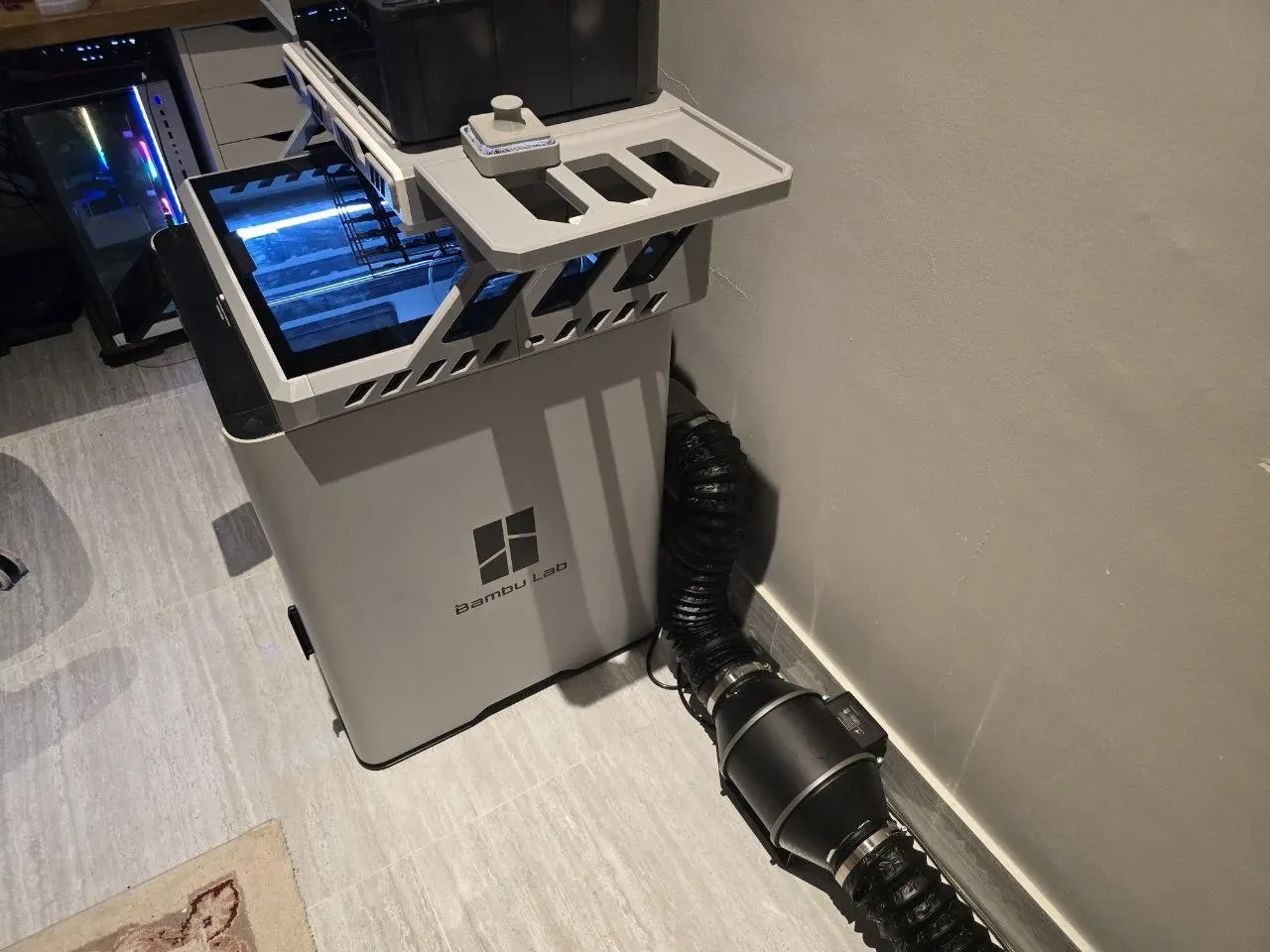
- Use an enclosure. ASA warps if it cools too fast or catches a draft. An enclosed printer that holds chamber heat is the single biggest thing that makes ASA print cleanly. I print mine enclosed and vent it out the window through an adapter I printed and an AC Infinity inline fan.
- Run it hot, cool it slow. Nozzle around 240 to 260 C and bed around 100 to 110 C, with the part cooling fan low or off. Fast cooling is what lifts the corners.
- Dry the filament. ASA pulls moisture out of the air. Dry the spool before a long print or you get popping, stringing, and a rough surface.
- Vent the fumes. ASA and ABS give off fumes you do not want to breathe. Print in a ventilated space or vent the enclosure outside.
If your corners still lift, the fix is almost always more chamber heat and less part cooling. The full rundown is in why corners lift and how to stop warping. For how ASA stacks up against the other materials in general, see filament types compared.
Price the print before you commit
ASA costs more than PLA, prints slower, and fails more often while you dial it in, so an ASA part is not the same cost as the same part in PLA. The 3D print cost calculator works out the real number, including filament, power, machine wear, and the failed prints, so you can price an outdoor part honestly.
Common questions
What is the best filament for outdoor 3D prints?
ASA. It resists UV by its own chemistry and holds its shape up around 100 to 105 C, so it survives sun and heat that ruin other filaments. It is harder to print than PLA and wants an enclosure, but for a part that has to last outdoors it is the right call.
Can I use PETG outdoors?
In shade it holds up for a long time, but in direct sun and real heat it will not. PETG is tough, easy to print, and great indoors, but its UV resistance is only fair and it softens at a lower temperature than ASA. For full sun in a hot climate, use ASA. I had a PETG container deform on my 98C dashboard in one afternoon.
Is ASA or ABS better for outdoor parts?
ASA. It has the same heat and UV resistance as ABS but warps less and is easier to print, and it was designed as the better-behaved option for outdoor use. Reach for ABS only if a particular part prints better in it or it is what you have on hand.
Why does PLA fail in the sun?
PLA softens at about 55 to 60 C, which a parked car or a sunny surface blows past in summer, so the part sags and deforms. It also goes brittle under UV. PLA is great indoors and for prototypes, but it is the wrong material for anything outdoors.